
Blog
Notes on running a board from the pack through the decision, the signature and the follow-up.
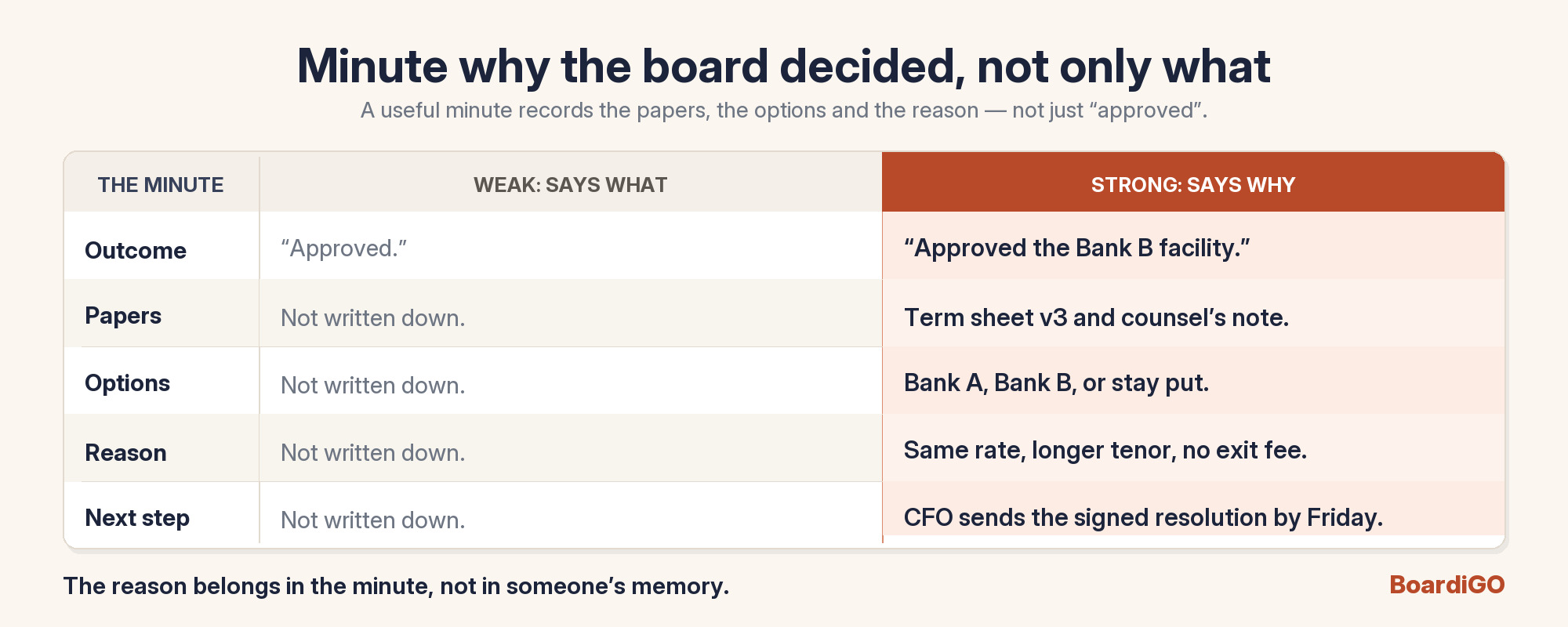
Minute why the board decided, not only what
A minute that says "approved" answers today's question. A minute that records the papers, the options and the reason answers the question someone asks two years later.
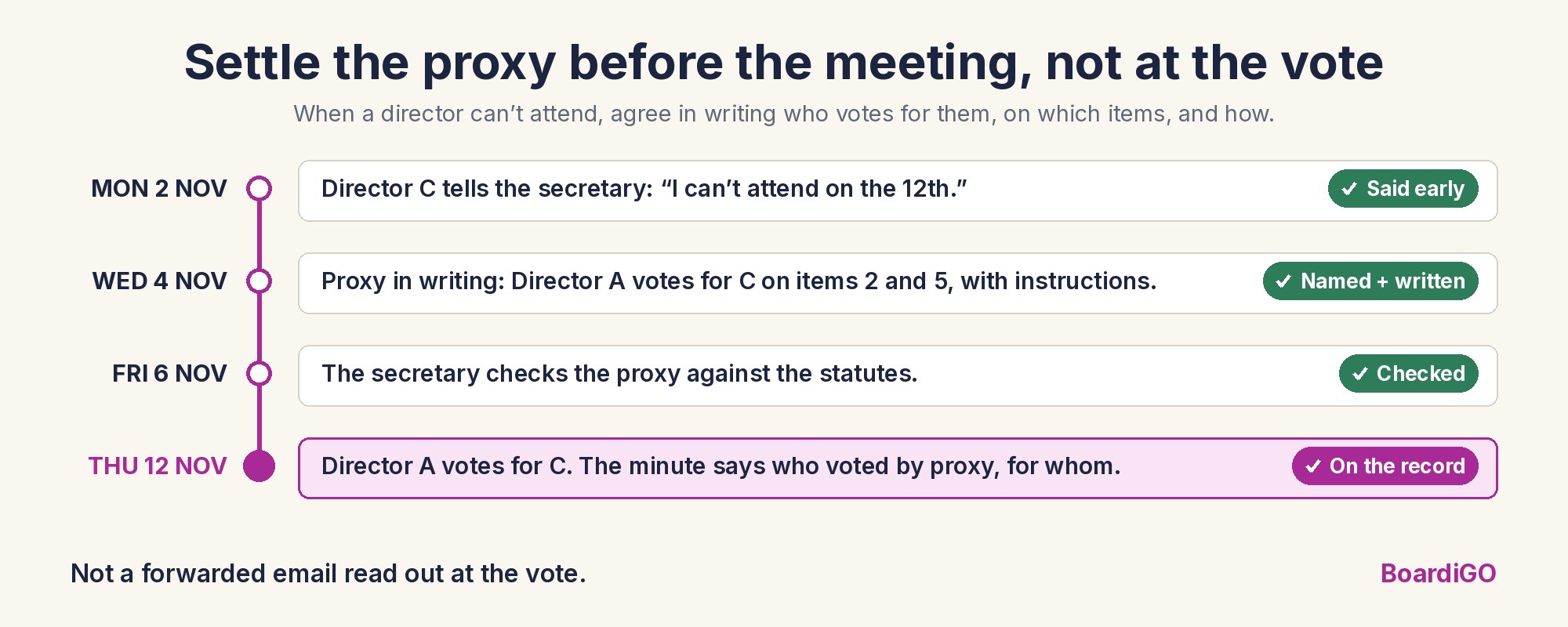
Settle the proxy before the meeting, not at the vote
When a director cannot attend, agree in writing who votes for them, on which items and how, and check it against your statutes before the meeting starts.
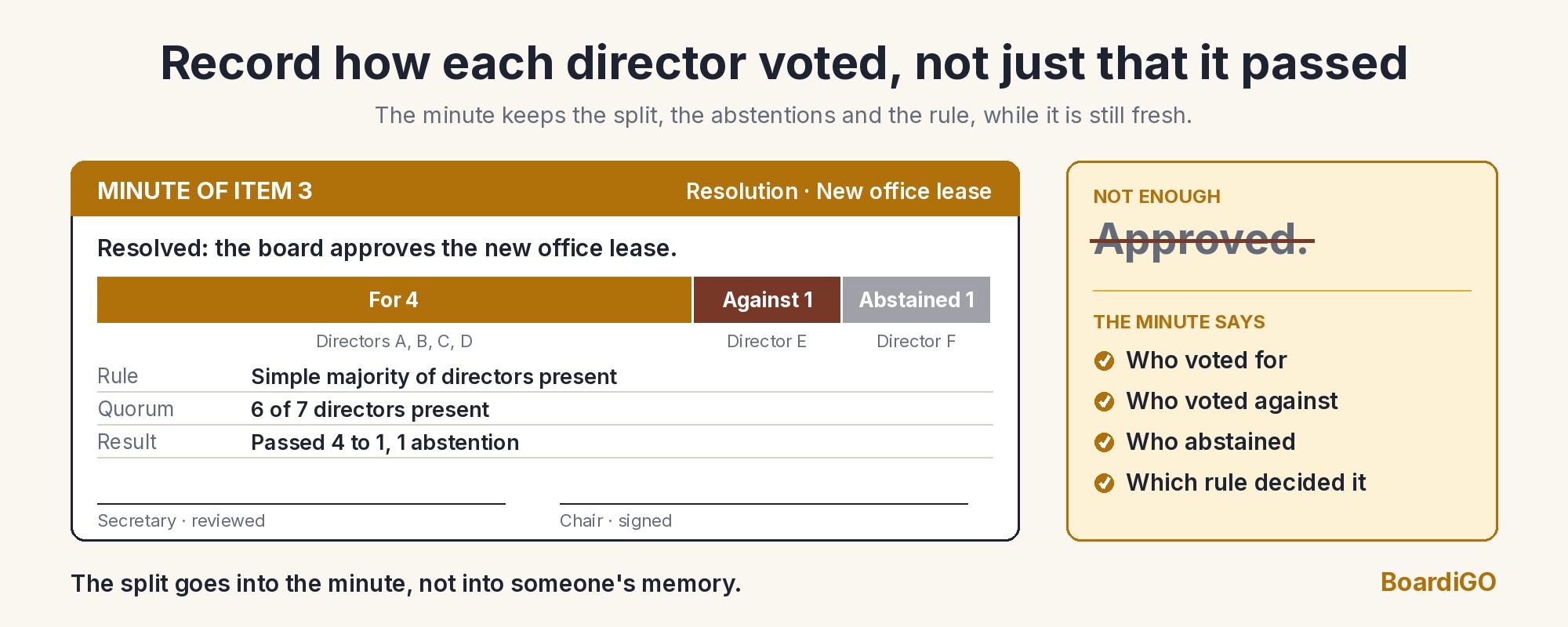
Record how each director voted, not just that it passed
A minute that only says approved loses the split, the abstentions and the rule. Write down who voted for, who voted against, who abstained, and the rule that decided it.
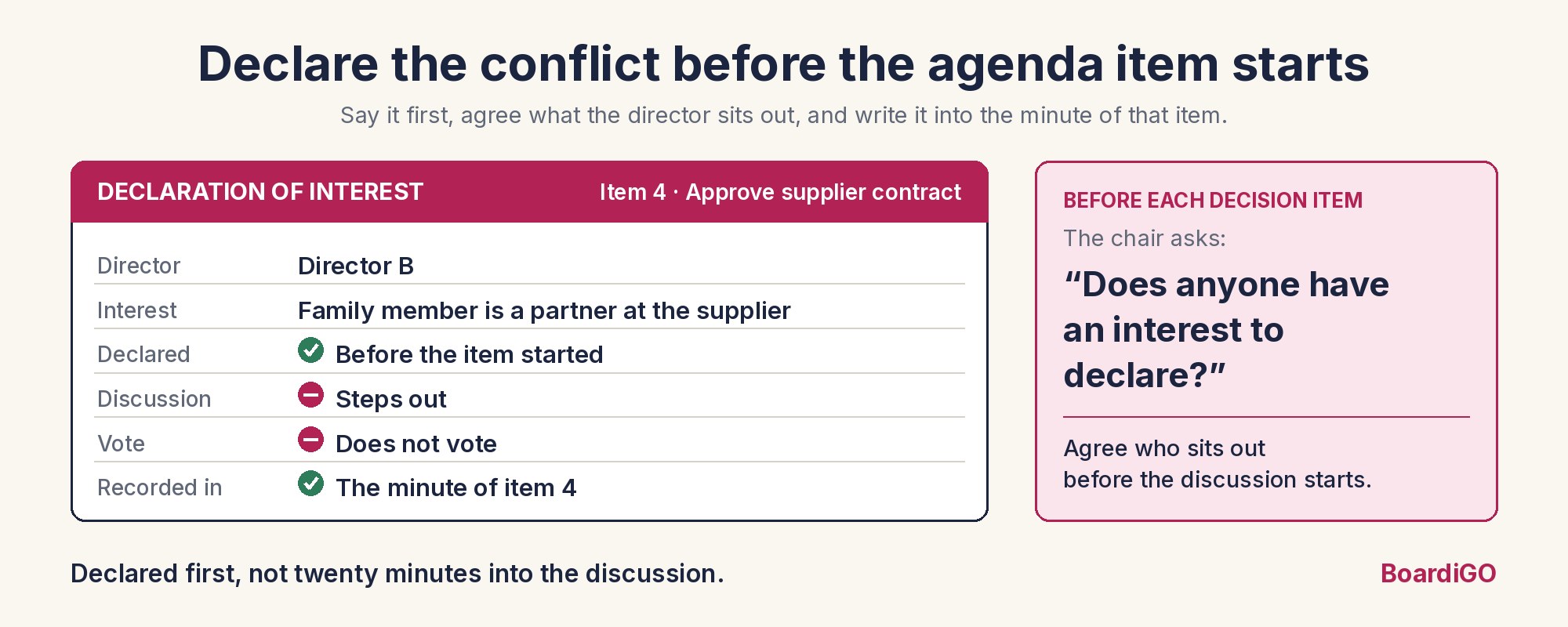
Declare the conflict before the agenda item starts
When a director has an interest in a decision, say so before the item starts, agree what they sit out, and write it into the minute of that item.
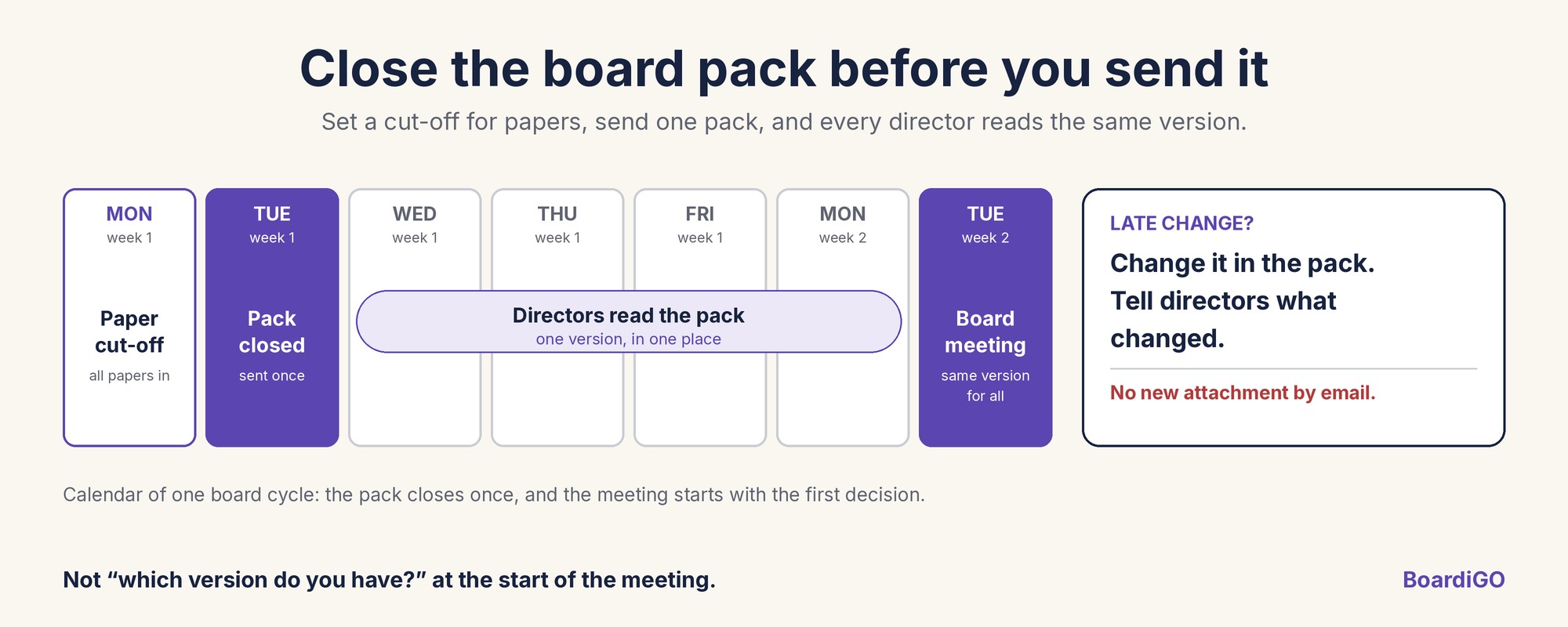
Close the board pack before you send it
Set a cut-off date for board papers and send one pack, so every director walks into the meeting having read the same version.
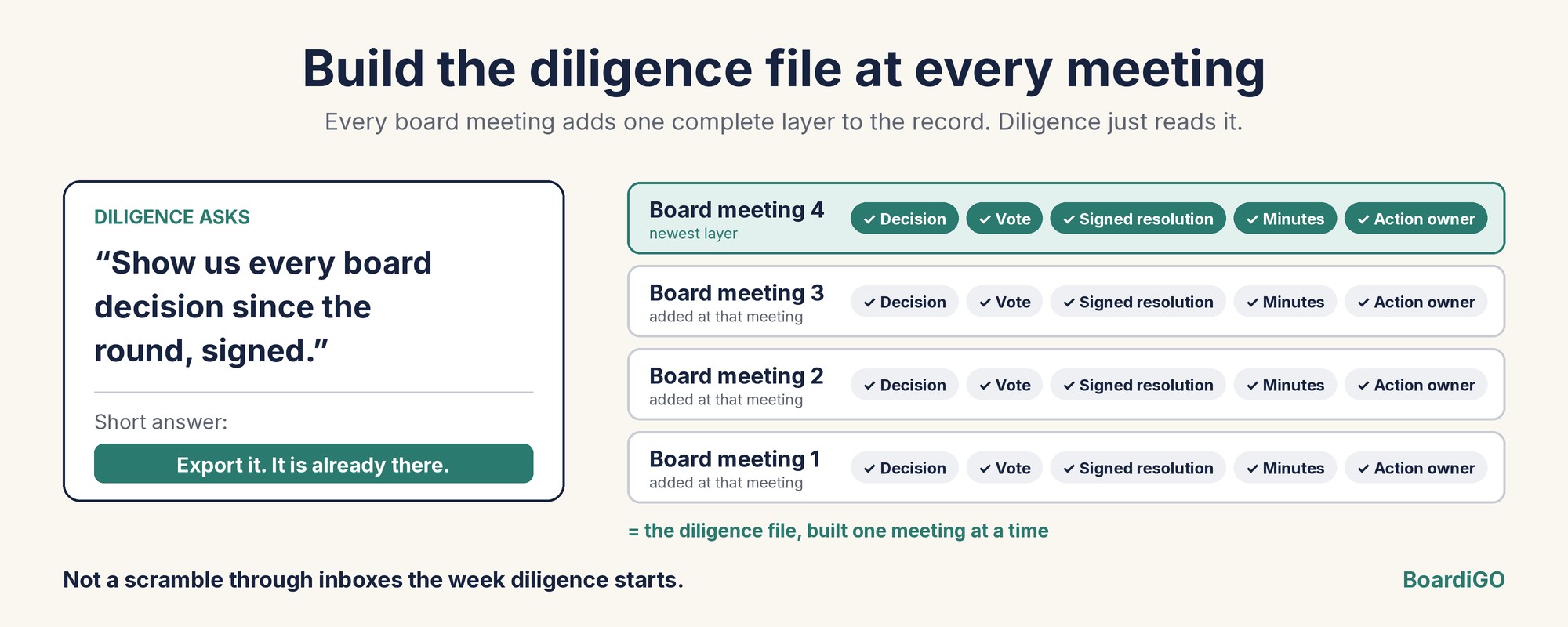
Build the diligence file at every meeting
Close each board meeting with a complete record, so when diligence asks for every board decision since the round, you export it instead of rebuilding it.
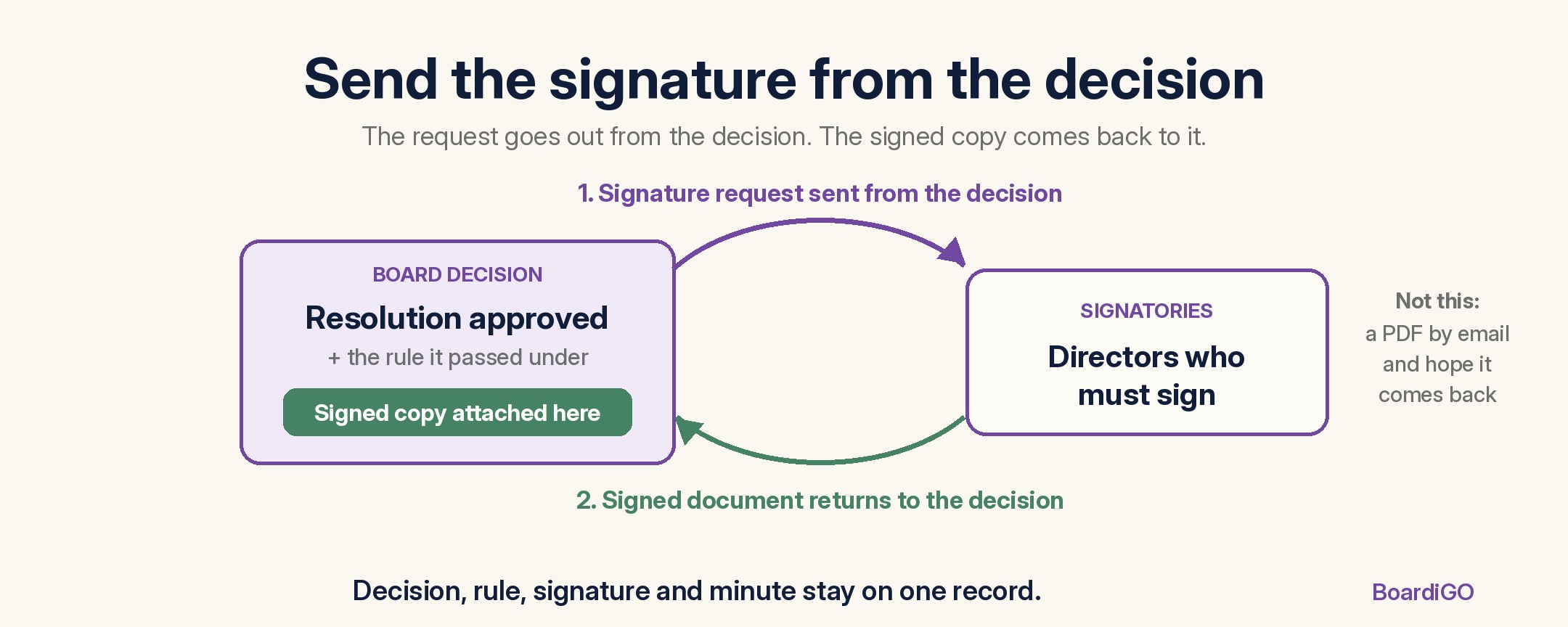
Send the signature from the decision
Request the signature from the decision it ratifies and bring the signed copy back to it, so nobody has to hunt for the signed resolution later.
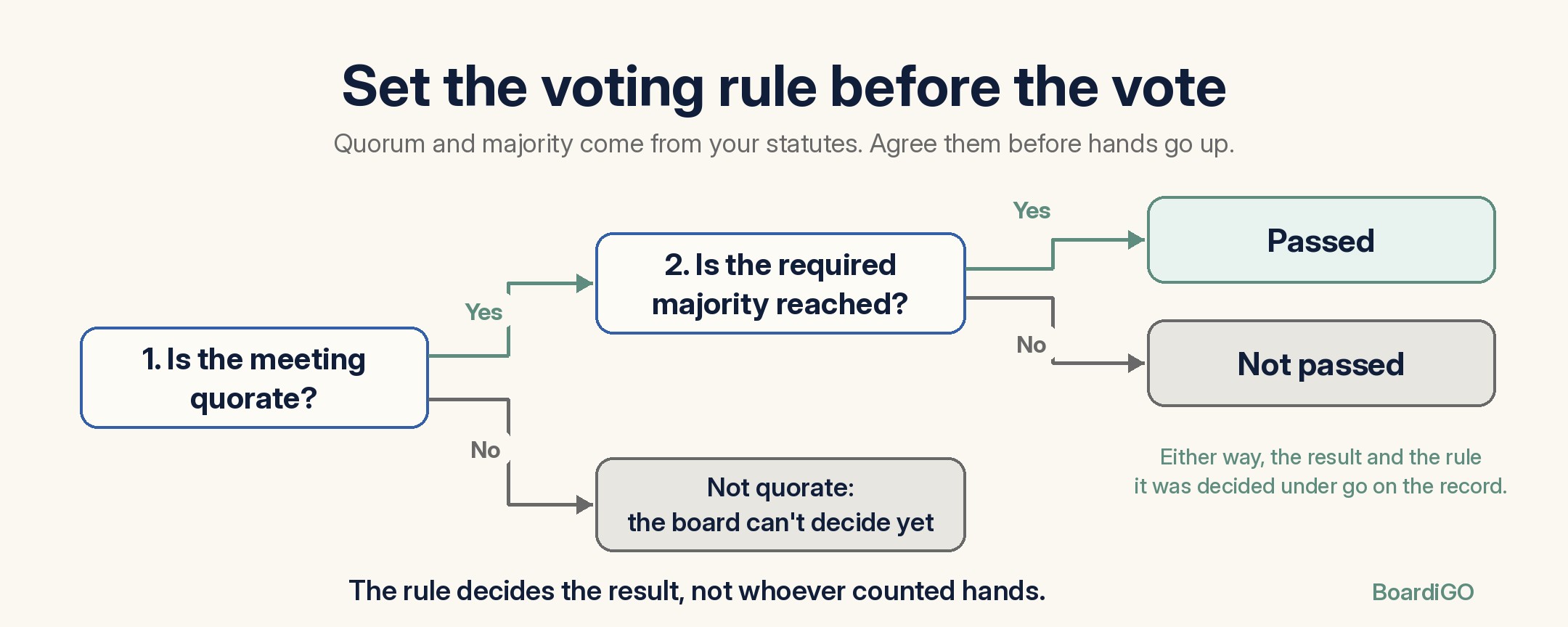
Set the voting rule before the vote
Agree the quorum and the majority before hands go up, so whether a decision passed is settled by the rule, not argued about afterwards.
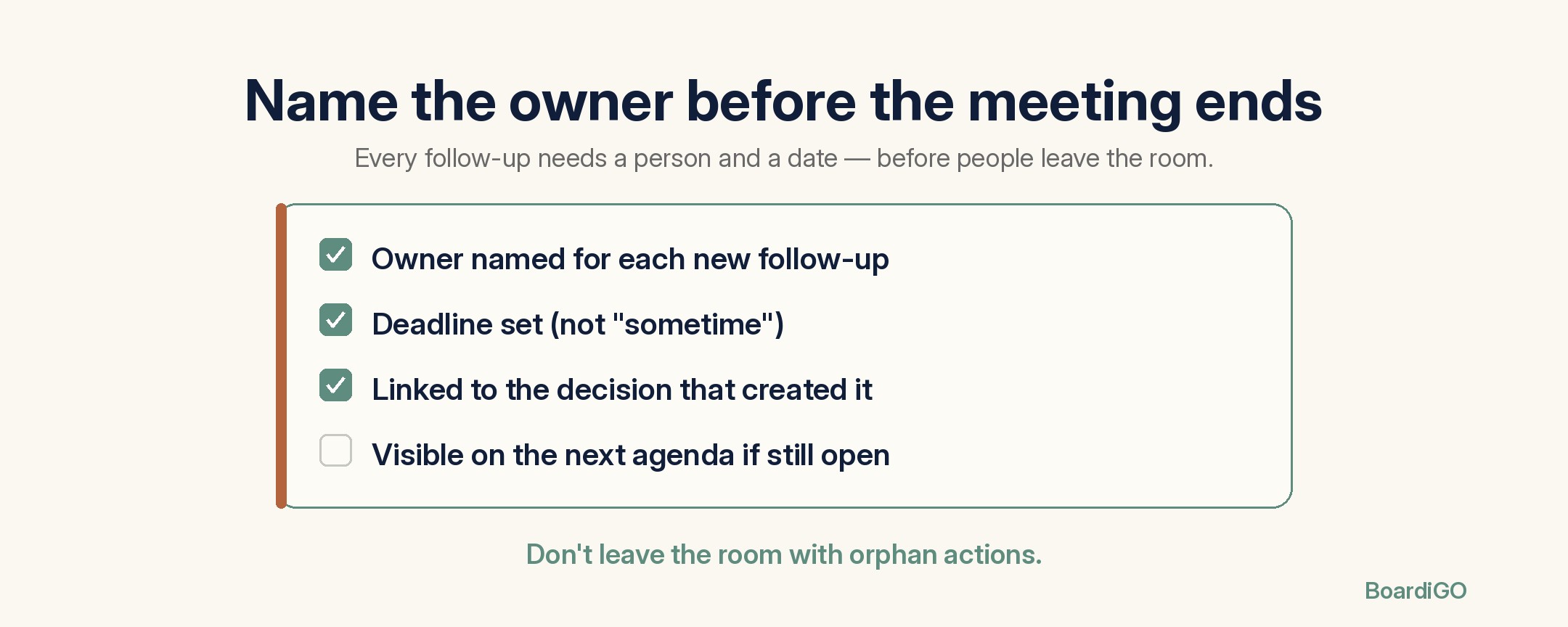
Name the owner before the meeting ends
A decision without an owner is a wish. Assign a person and a date to every new follow-up before people leave the room.
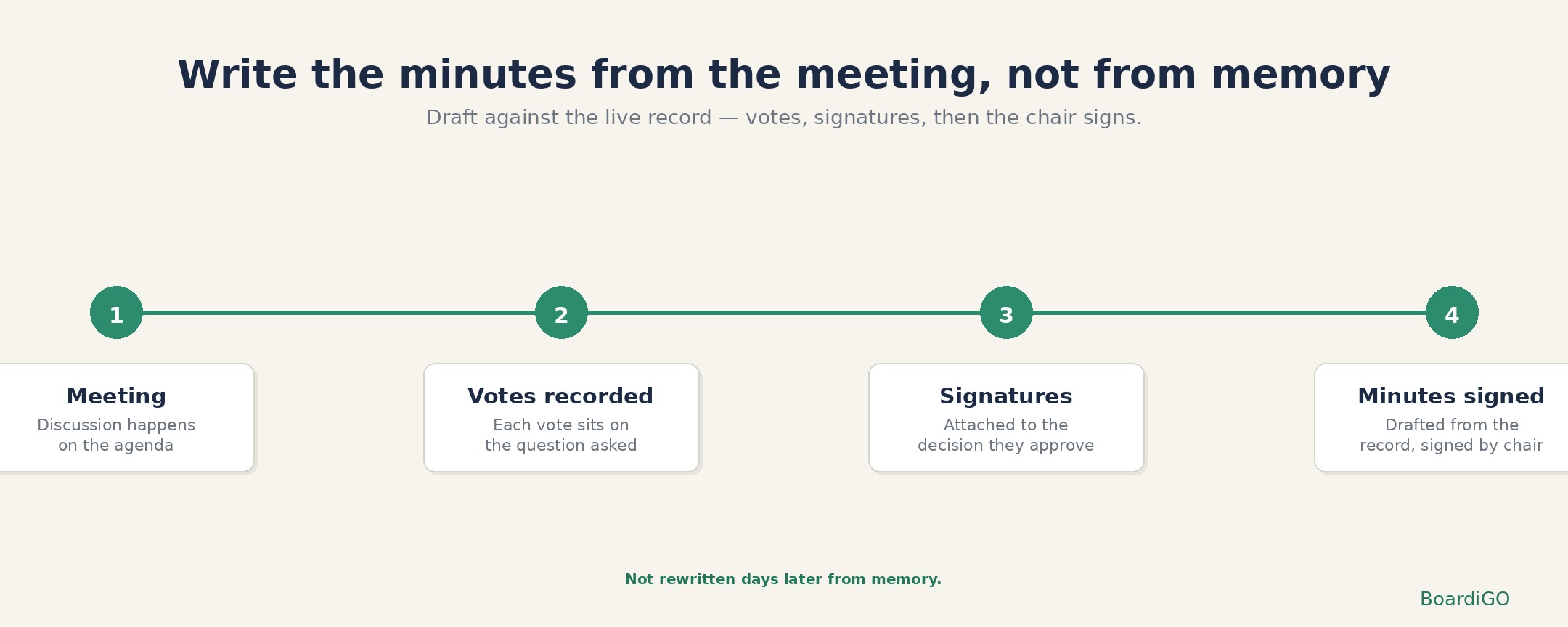
Write the minutes from the meeting, not from memory
Minutes written days later from memory miss votes and signatures. Draft them against the live record, then have the chair sign.
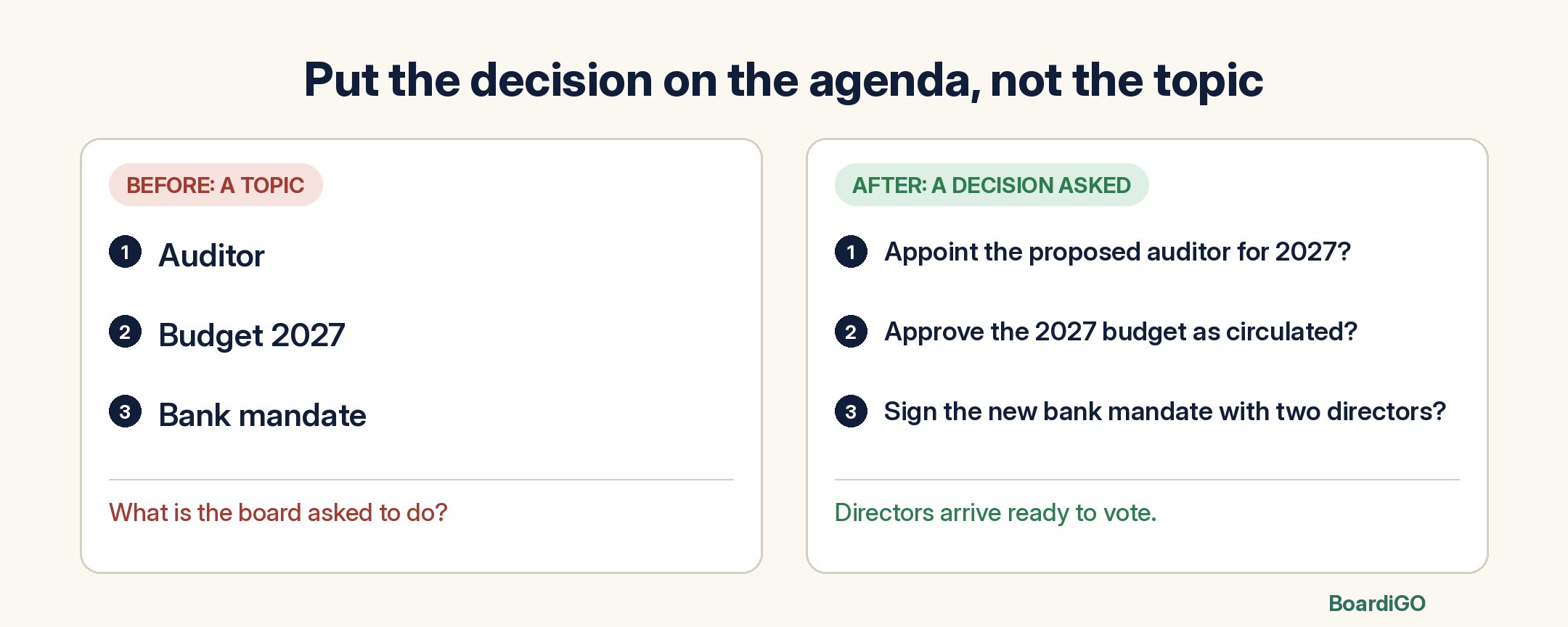
Put the decision on the agenda, not the topic
An agenda that lists topics produces discussions. An agenda that states the decision asked produces decisions.
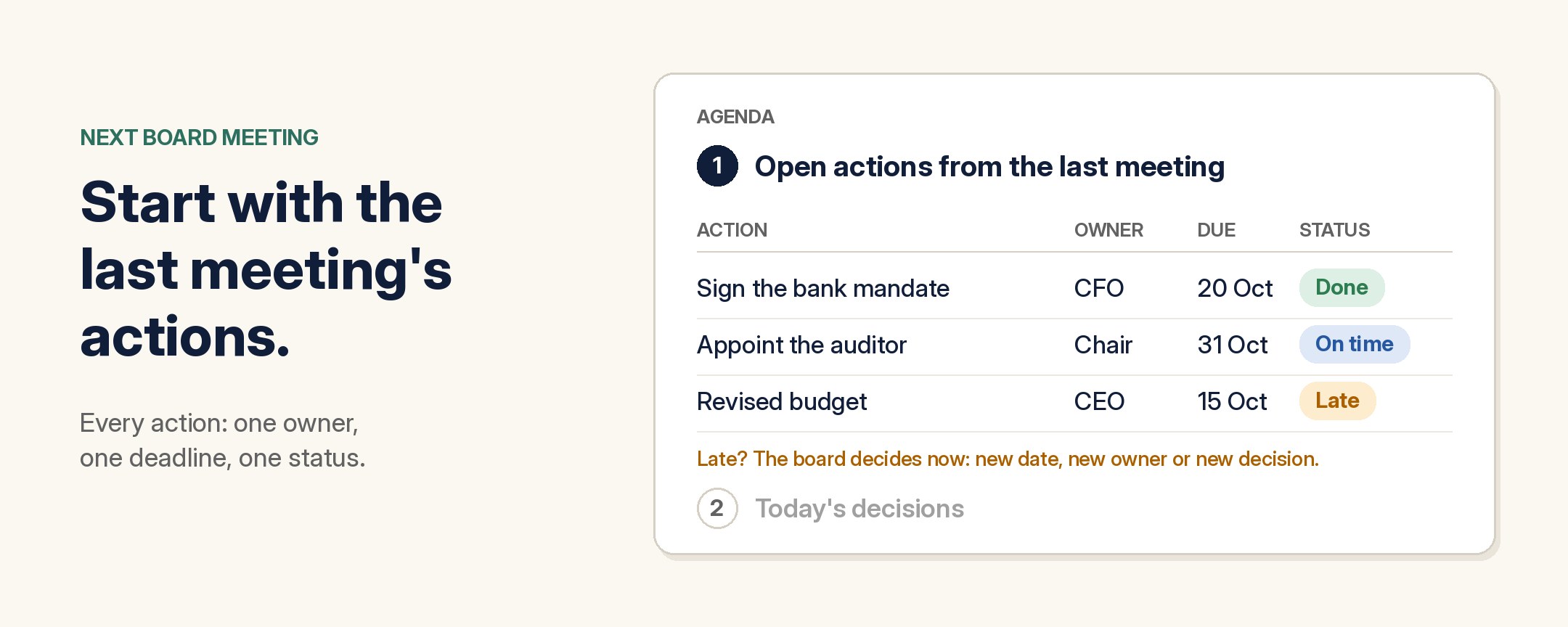
Start the next board meeting with the last one's actions
Board decisions turn into work. Give each action an owner and a deadline, and open the next meeting by reviewing them.
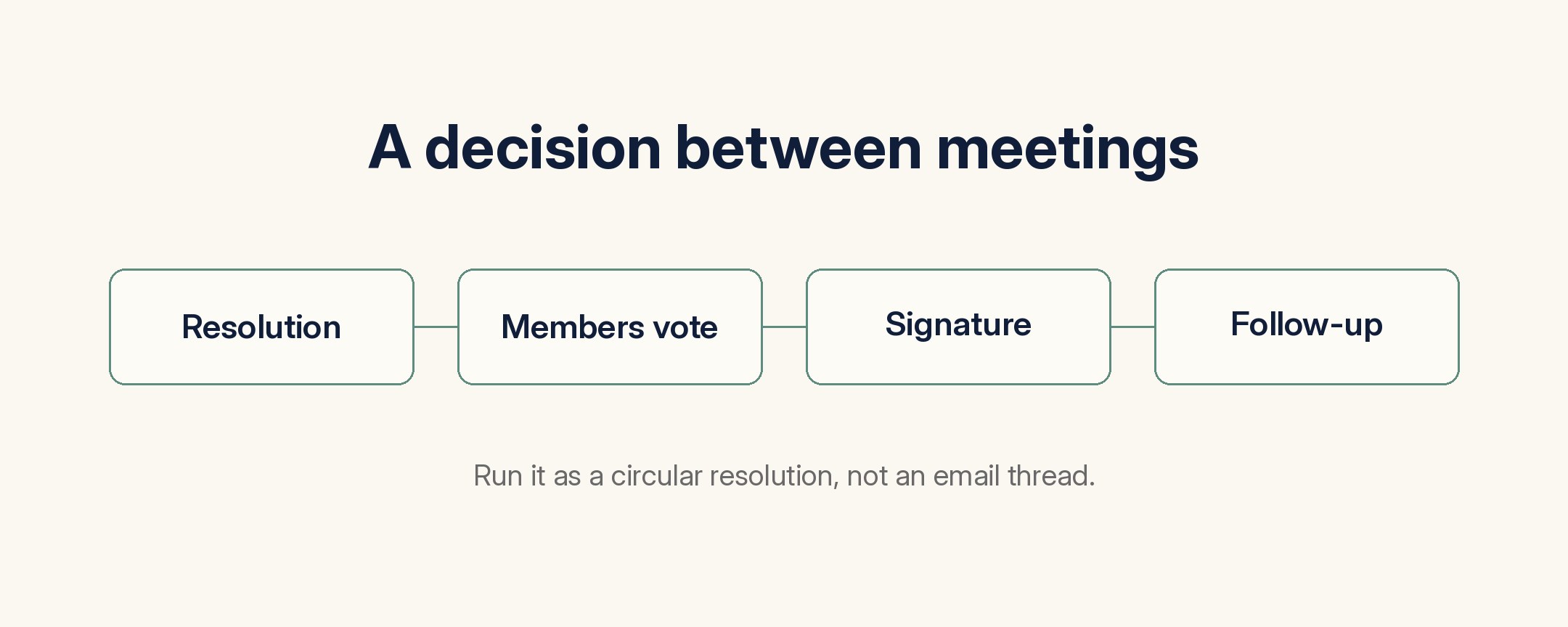
When a decision can't wait for the next board meeting
Some board decisions can't wait six weeks. Run them as a circular resolution, not an email thread, and keep them on the record.
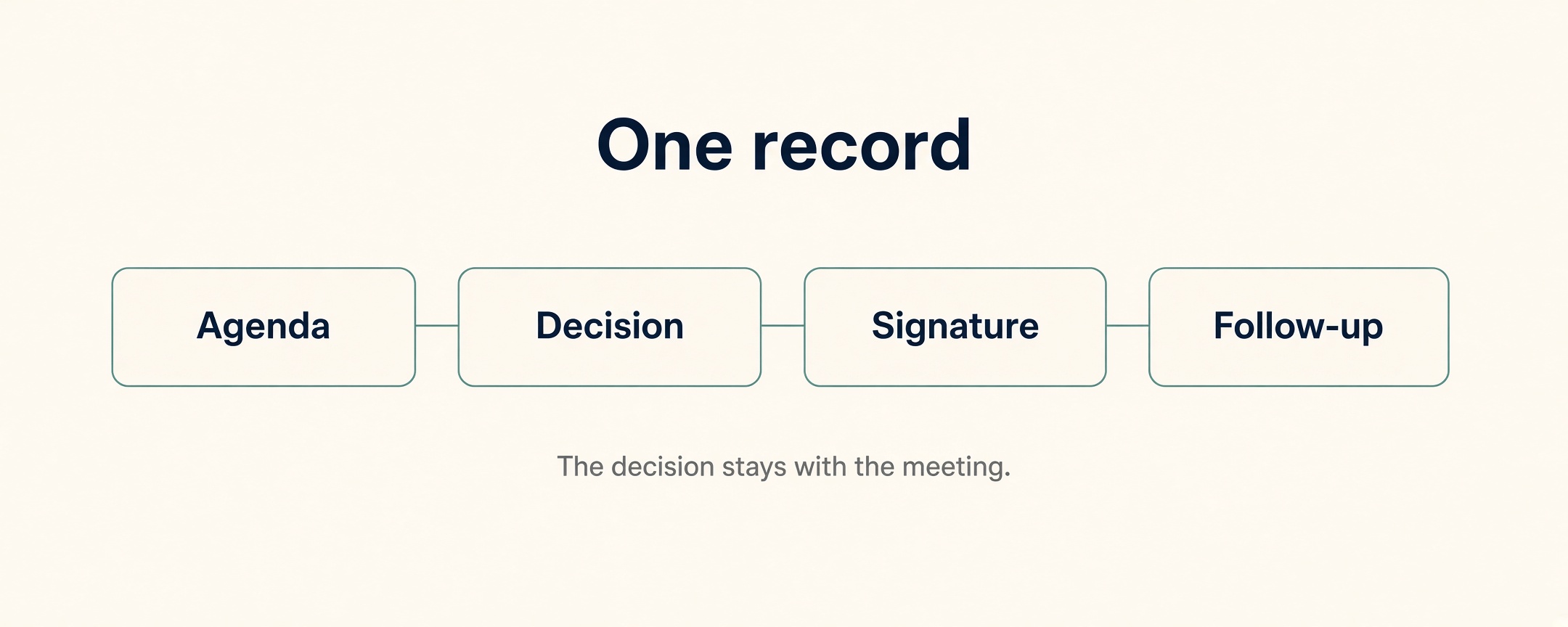
When the investor update needs a decision, keep it on the record
After a round, an investor update often hides a decision. Keep that decision with the meeting, the signature and the follow-up.