
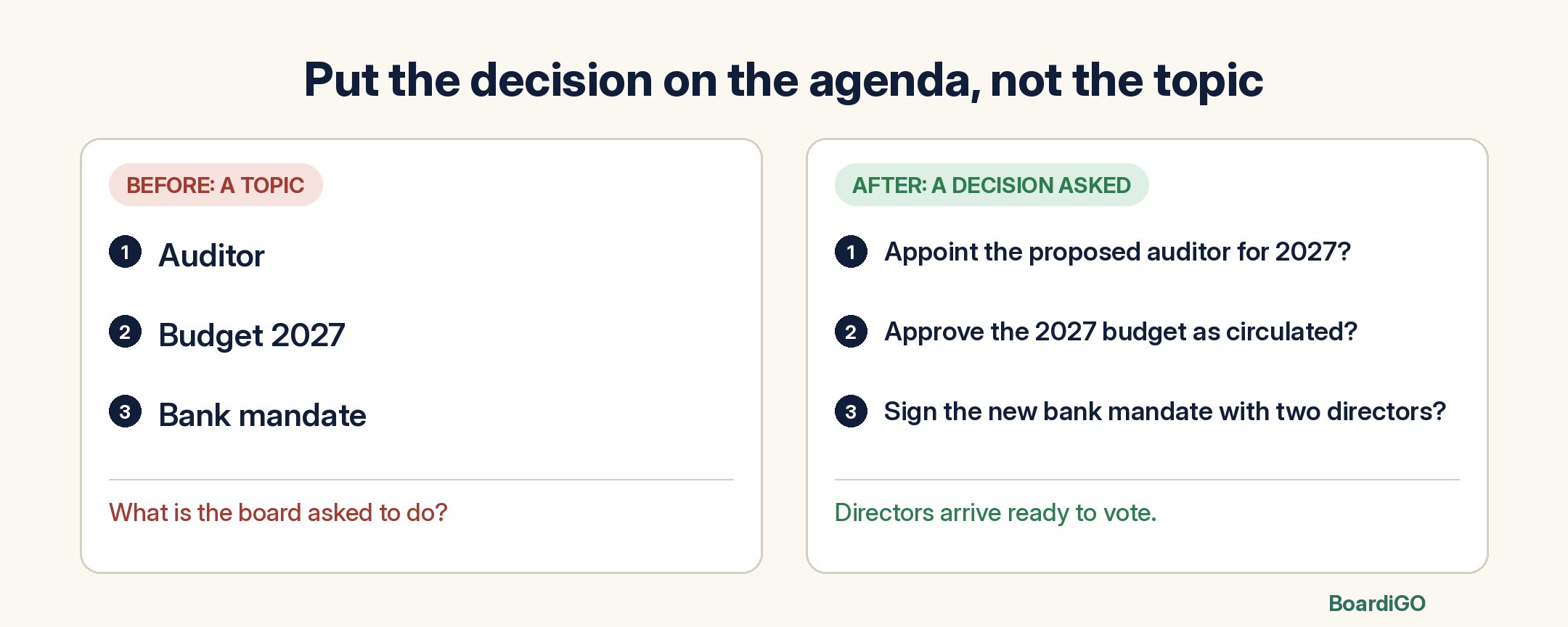
Look at a typical board agenda. Item 3: Auditor. Item 4: Budget 2027. Item 5: Bank mandate.
Each line names a topic. None of them says what the board is asked to do. So directors read the pack without knowing what they will be asked to decide, the discussion wanders, and the meeting ends with “let’s come back to this next time”.
The fix is simple: write each agenda item as the decision the board is asked to take.
From topic to question
Rewrite each item as a question the board can answer with a vote:
- “Auditor” becomes “Appoint the proposed auditor for 2027?”
- “Budget 2027” becomes “Approve the 2027 budget as circulated?”
- “Bank mandate” becomes “Sign the new bank mandate with two directors?”
Some items are for information only. Say so on the agenda. Then directors know which items need their vote and which only need their attention.
What changes in the room
Directors read the pack with the question in mind. They come with their objections ready, not their first impressions. The chair knows when the discussion is over: when the board can answer the question. And the minutes write themselves more easily, because the decision was stated before the meeting started.
If the board can’t answer the question yet, that is a decision too. Say what is missing, who brings it, and by when.
Where BoardiGO fits
In BoardiGO, the agenda leads to decisions, with the decisions visible early. The board pack sits next to the agenda, so every director reads the same version. When the board votes, the vote is recorded where the discussion happened, and the signature and the minutes follow from it.
BoardiGO does not write the question for you. The chair and the secretary do, before the pack goes out. BoardiGO keeps the question, the vote and the outcome together on the record.
Before your next board pack goes out, read each agenda item and ask: what is the board asked to decide here?