
The vote passes. Someone says “we’ll take care of it.” The meeting ends. Two weeks later nobody is sure who “we” was.
That is how board decisions turn into wish lists. The resolution is signed. The minute records it. And the work that makes it real has no name next to it.
Close with owners, not intentions
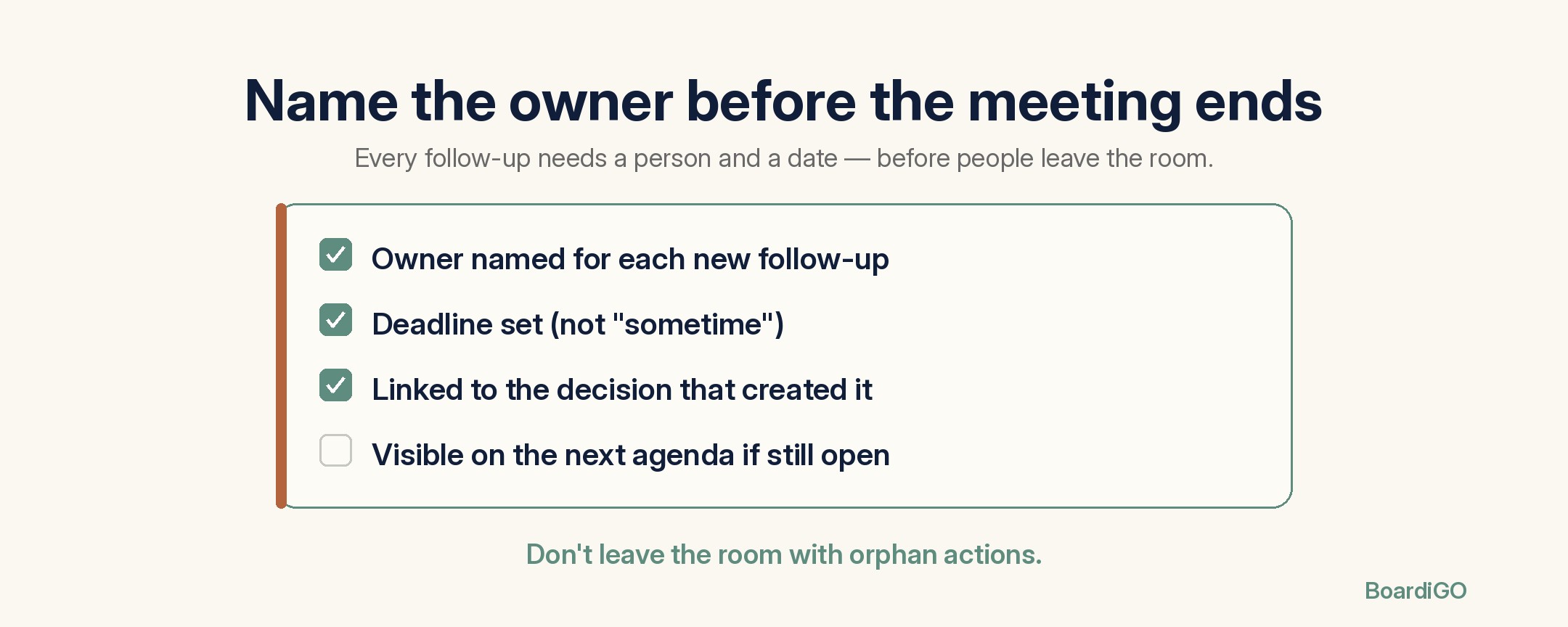
Before people leave the room, every new follow-up from the meeting should have:
- A single owner — one person, not a team or “whoever can.”
- A date — a real deadline, not “soon” or “next cycle.”
- A link to the decision that created it — so the action is not floating free of the vote.
- A place on the next agenda if it is still open — so it comes back into the room.
If you cannot name the owner in the meeting, the board has not finished deciding. It has only agreed that something should happen.
What changes when ownership is on the record
When the owner and the date sit next to the decision, chasing becomes checking. Directors who were not in the room can see who is responsible. The secretary does not rebuild a task list from chat threads. And when the next meeting opens, open follow-ups are already there — not reconstructed from memory.
Where BoardiGO fits
In BoardiGO, each follow-up sits on the decision that created it, with a named owner and a date. The vote, the signature and the action stay on one record. The next agenda can surface what is still open without a separate spreadsheet.
BoardiGO does not replace the board’s judgment about who should own what. It keeps the owner next to the decision so the meeting does not end with orphan actions.
Before your next board meeting closes, ask: does every new follow-up have a name and a date, or are we hoping someone will remember?