
A board meeting ends with decisions. Sign the new bank mandate. Appoint an auditor. Come back with a revised budget. Then everyone leaves, and the decisions turn into work that somebody has to do.
That work usually lives in the minutes, in a paragraph at the bottom of page six. Six weeks later the board meets again. Someone asks whether the bank mandate was signed. Nobody is sure. The point goes back on the agenda, or quietly disappears.
The fix is simple: open every board meeting with the actions from the last one.
Give every decision a follow-up
A decision is not done when the vote passes. It is done when the work it created is finished. So before the meeting closes, each decision that creates work gets three things:
- An owner: one person, not “management”.
- A deadline.
- A place next to the decision that created it, not in a separate task list nobody on the board opens.
Put open actions first on the next agenda
In BoardiGO, each follow-up action has an owner and a deadline, and sits next to the decision that created it. When the next meeting opens, the open actions from the previous one are already on the table. Nobody has to remember to chase them.
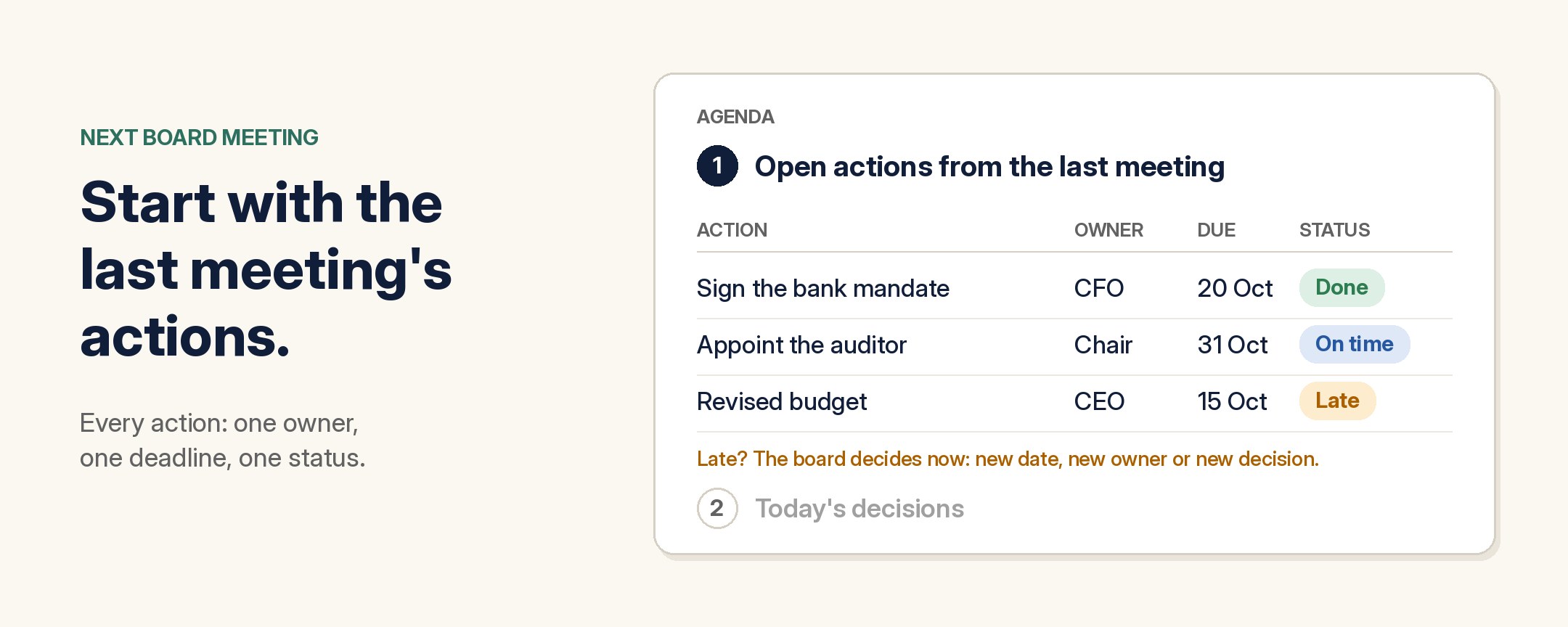
The first item of the meeting becomes a short review:
- Done: the owner has closed it.
- Open and on time: the owner confirms the date.
- Late: the board decides what happens now. A new date, a new owner, or a new decision.
That last case is the one that matters. A late action is a decision that hasn’t happened yet. Reviewing it in the room keeps it from being pushed to the meeting after next.
Why it belongs at the top
The board sees what its decisions actually produced. Directors stop deciding the same thing twice. And when an investor or auditor asks what happened after a resolution, the answer sits next to the decision: who owned it, by when, and whether it was done.
BoardiGO does not decide who owns the work. The board does, in the meeting. BoardiGO keeps the owner, the deadline and the status on the record until the action is closed.
At your next board meeting, make the last meeting’s actions item one.