
Some decisions don’t fit the board calendar. A contract needs approval this week. The bank asks for a board resolution. A director appointment can’t wait six weeks for the next meeting.
The usual answer is an email: here is the resolution, please reply “approved”. Replies arrive one by one. Someone forwards a PDF for signature. Someone else signs an older version. A month later, nobody can say who approved what, or whether enough members did.
A circular resolution is the board deciding in writing, without meeting. It deserves the same care as a decision taken in the room.
Run it like a meeting decision
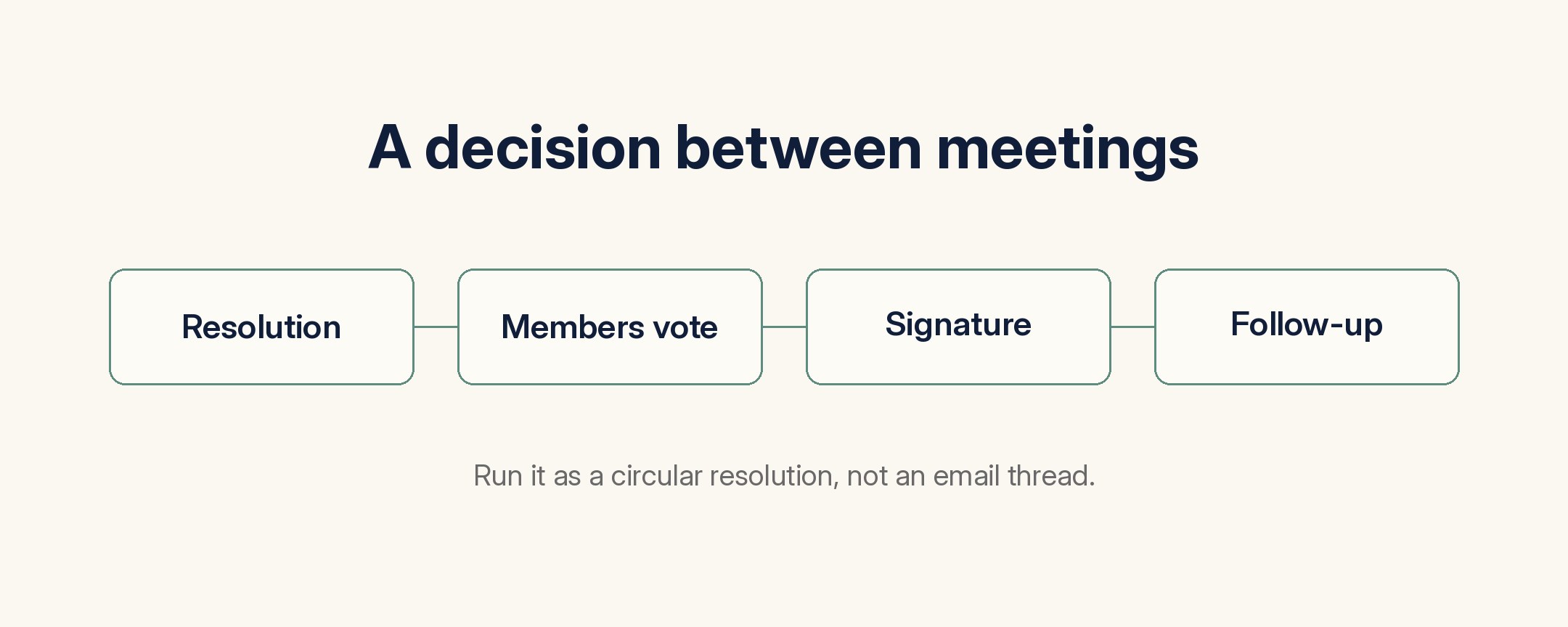
In BoardiGO, a decision between meetings follows the same path as one taken in a meeting:
- The resolution is written once, with the documents the members need to decide.
- Each member votes on the record. Quorum, majority and proxies are part of the decision, not a count someone keeps in their inbox.
- The signature stays attached to the resolution it approves.
- The follow-up has an owner, so the decision actually happens.
Why it matters later
When the bank, the auditor or a new investor asks how that decision was taken, the answer is already there: the resolution, the votes, the signature and the follow-up, next to the rest of the board’s decisions. Nobody has to search an inbox.
BoardiGO does not decide which matters can be approved in writing. Your articles and your counsel do. BoardiGO keeps the decision on the record once you run it.
Next time a decision can’t wait, don’t send it as an email thread. Run it as a circular resolution, and keep it on the record.